
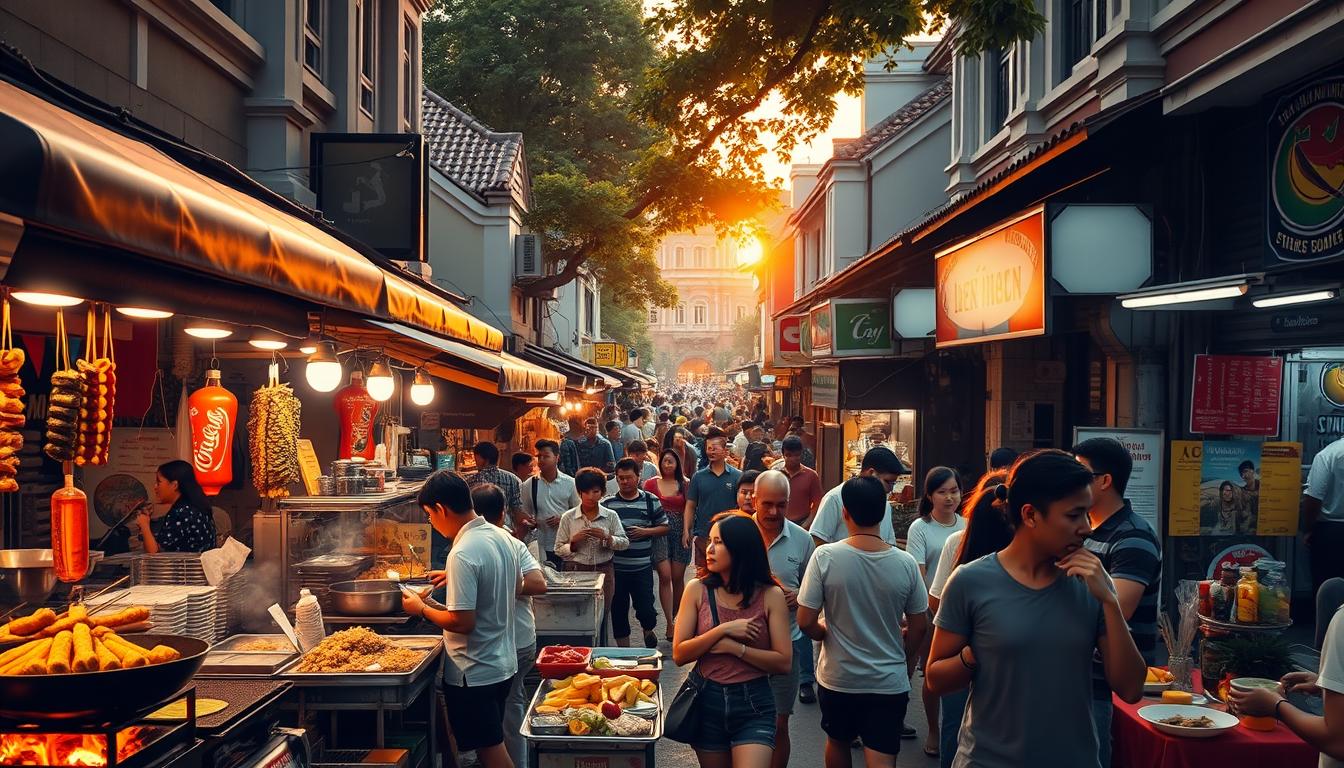
Welcome to Street a Savor flavor-packed adventure where every dish celebrates cultural harmony. Imagine biting into recipes perfected over generations, blending Chinese wok mastery, Malay spice blends, and Indian cooking techniques. This is where humble stalls serve world-class meals at wallet-friendly prices.
Our guide unlocks over 25 must-try creations – from smoky satay skewers to rich laksa soups. You’ll discover hidden hawker centers buzzing with locals and Michelin-recognized vendors plating $3 masterpieces. We’ve mapped out top spots, seasonal specialties, and pro tips to eat like someone who grew up here.
Whether you’re craving crispy roti prata for breakfast or chili crab feasts after sunset, this journey proves great meals don’t need fancy settings. Ready to taste why this city’s culinary heartbeat thrills both travelers and food critics? Let’s dive fork-first into the ultimate edible checklist.
Key Takeaways
- Explore 25+ Street iconic dishes blending Chinese, Malay, Indian, and Indonesian flavors
- Find Michelin-approved eats at local hawker center prices
- Navigate popular spots using insider tips on timing and ordering
- Discover both classic recipes and modern twists shaping today’s scene
- Enjoy restaurant-quality meals without the high costs
An Introduction to Singapore’s Hawker Culture
Picture dining hubs where chefs with 40 years of experience serve $4 meals beside tech workers and retirees. This isn’t a fantasy – it’s everyday life at hawker centers. These vibrant spaces evolved from 1960s street vendor bans, transforming chaotic carts into organized culinary playgrounds.
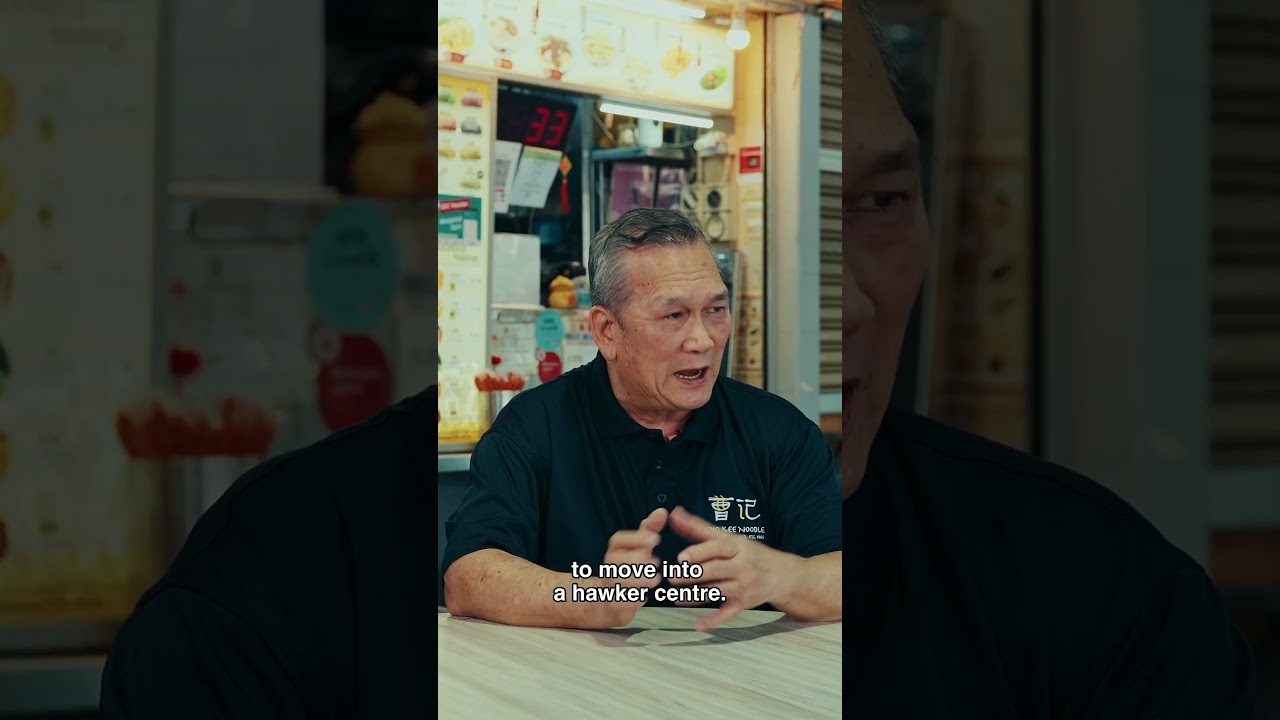
From Sidewalks to Structured Success
When hygiene concerns forced vendors indoors, something magical happened. Families who once cooked over open flames brought their secret recipes into shared spaces. Today’s centers preserve those traditions through time-tested dishes and affordable pricing. A 2022 survey revealed 63% of stall owners started learning their craft before age 20.
More Than Meal Spots
These hubs serve as equalizers – bankers queue beside construction workers for perfectly charred satay. The real magic? Over 120 stalls can operate peacefully under one roof, showcasing Chinese claypot rice beside Malay nasi lemak. Yet challenges loom: 78% of current vendors are over 55, with few successors lining up.
| Era | Vendors | Key Features | Price Range |
|---|---|---|---|
| 1960s | Mobile carts | Street-side service | $0.50-$1.50 |
| Today | Licensed stalls | Shared seating | $3-$6 |
Recent government programs now train young chefs to continue legacy recipes. As one third-generation noodle seller puts it: “We’re not just feeding stomachs – we’re keeping stories alive.” The race to preserve these flavors makes every visit deliciously urgent.
Uncovering Singapore street food Treasures
Navigating the maze of culinary options here feels like a treasure hunt with edible rewards. With over 100 hawker centers hosting thousands of vendors, your best strategy combines local wisdom and strategic timing. Start by following the queues – a snaking line often signals decades-perfected dishes worth the wait.
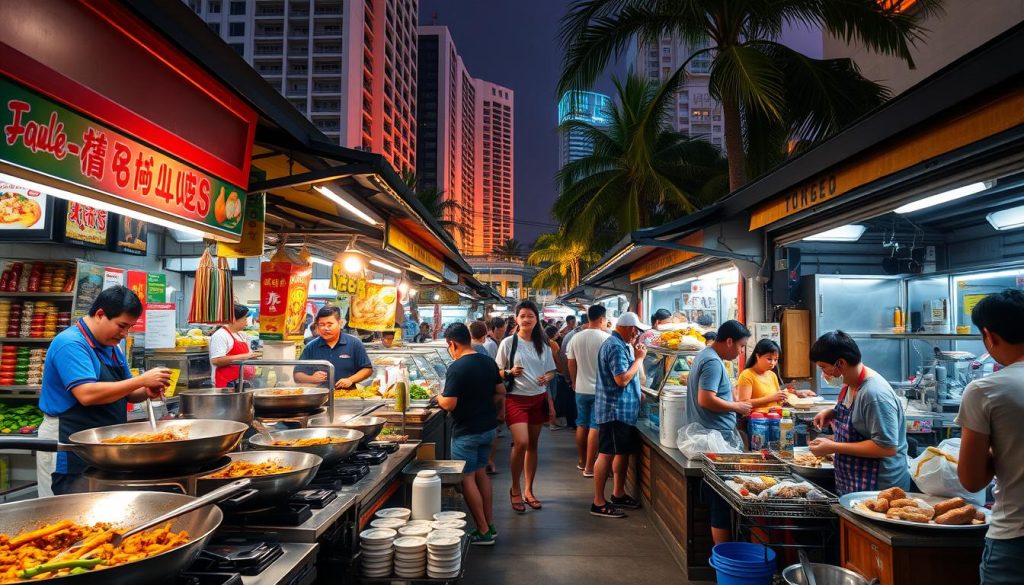
Seasoned street food hunters swear by two rules: look for weathered signs showing family recipes passed through generations, and focus on stalls selling just 1-2 specialties. “Mastery comes from repetition,” explains a fourth-generation noodle maker. “If they’re making 500 bowls daily, you know each one’s dialed in.”
Mornings bring sizzling woks at centers near wet markets, while late-night spots buzz with satay smoke. For hidden gems, explore neighborhoods where elderly regulars dominate – their loyalty speaks louder than social media hype. Don’t fear pointing at what others are eating; regulars love sharing their favorites.
Diversity thrives in these communal kitchens. One center might showcase fiery Indian curries beside delicate Cantonese soups, reflecting the area’s cultural roots. Recent surveys show 82% of vendors tweak recipes based on their regulars’ preferences, creating hyper-local twists on classic street food.
Pack comfortable shoes and an adventurous palate. The real magic happens when you veer off checklist paths to discover your own perfect chili crab or kaya toast spot. As one food blogger puts it: “Your greatest meal might come from a stall without an English menu – that’s when the real fun begins.”
Iconic Laksa: The Heart of Fusion Flavors
Aromatic steam rises from bowls where silky noodles swim in golden broth – this is laksa at its finest. The dish perfectly marries Chinese rice noodle techniques with Malay spice mastery, creating a flavor symphony that’s become a cultural touchstone.
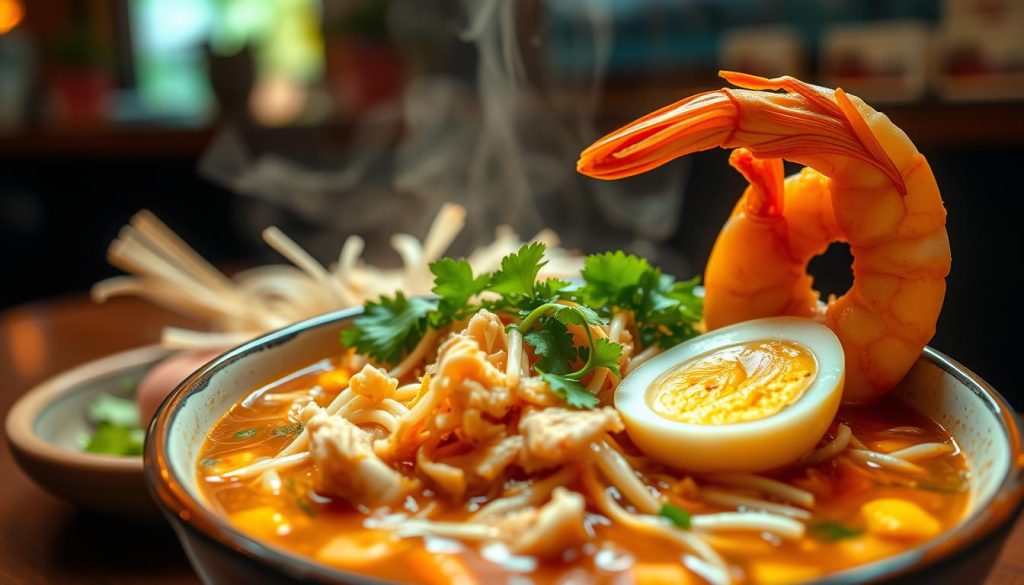
Sungei Road’s Secret Recipe
At 27 Jalan Berseh, a legendary stall keeps tradition alive with aluminum pots simmering over charcoal flames. Sungei Road Laksa’s origin story rivals its taste: a stranger gifted the recipe in the 1950s, then vanished. Today, their “one-bowl wonder” features:
- Bite-sized rice noodles that soak up broth
- Mild coconut-infused curry with smoky depth
- Plump blood cockles and zesty Vietnamese coriander
Lines form fast but move faster – they’ve mastered serving 500+ bowls daily. Arrive before 11 AM to beat lunch crowds at this $3 treasure.
Regional Twists on a Classic
From Katong’s coconut-rich versions to tangy Assam styles, laksa adapts to local tastes. Vendors often tweak their sauce balance based on neighborhood preferences:
| Type | Base | Key Ingredients | Region |
|---|---|---|---|
| Katong | Coconut milk | Shrimp, laksa leaves | East Coast |
| Assam | Tamarind broth | Mackerel, lemongrass | Malay communities |
| Curry | Spiced gravy | Chicken, tofu puffs | City centers |
True connoisseurs seek out stalls using freshly-pounded spices. As one third-generation hawker notes: “The wok’s heat matters as much as the recipe – that’s where the magic happens.” Whether you prefer creamy or fiery, each bowl tells a story of culinary evolution.
Savoring Bak Kut Teh and Other Hearty Soups
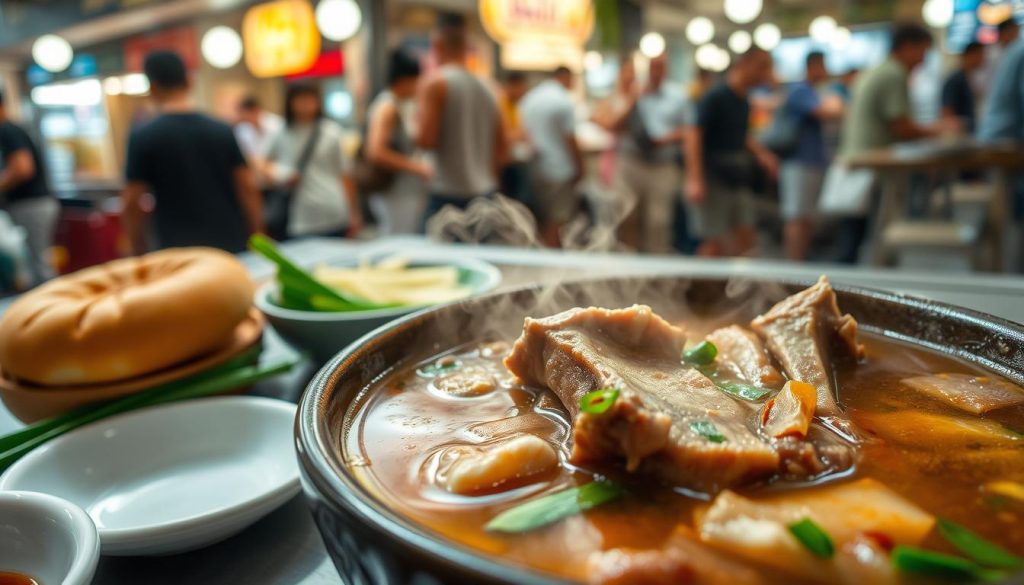
Steam curls from bowls cradling tender pork ribs in golden broth – this is bak kut teh at its soul-warming best. Born from Chinese immigrant kitchens, the dish translates to “pork bone tea,” though the recipe contains none. Workers once paired the rich soup with strong oolong to cut through fatty richness, creating a ritual that endures today.
The Authentic Pork Ribs street Recipe
Masterful versions start with prime cuts simmered for hours with garlic and white pepper. “The broth should glow like liquid amber,” says Outram Park Yahua’s head chef. Their $7 bowl features fall-off-the-bone meat in peppery perfection – open from dawn till 4 AM for late-night cravings.
| Quality Marker | Ideal Trait | Common Pitfalls |
|---|---|---|
| Broth | Clear, peppery warmth | Cloudy or overly salty |
| Meat | Soft but intact | Stringy or dry |
| Sides | Pickled veggies, fried dough | Overpowering flavors |
Locals build meals around shared pots, dipping rice into fragrant broth. The experience thrives at communal tables where laughter mixes with clinking spoons. For first-timers, balance each peppery sip with bitter tea – it transforms the meal into a cleansing ritual.
Perfect bites marry velvety pork with mustard greens’ tang. As regulars advise: “Let the broth coat your tongue before reaching for rice.” This approach reveals why this humble soup remains a cornerstone of comfort dining.
Hokkien Mee: Stir-Fried Noodle Magic
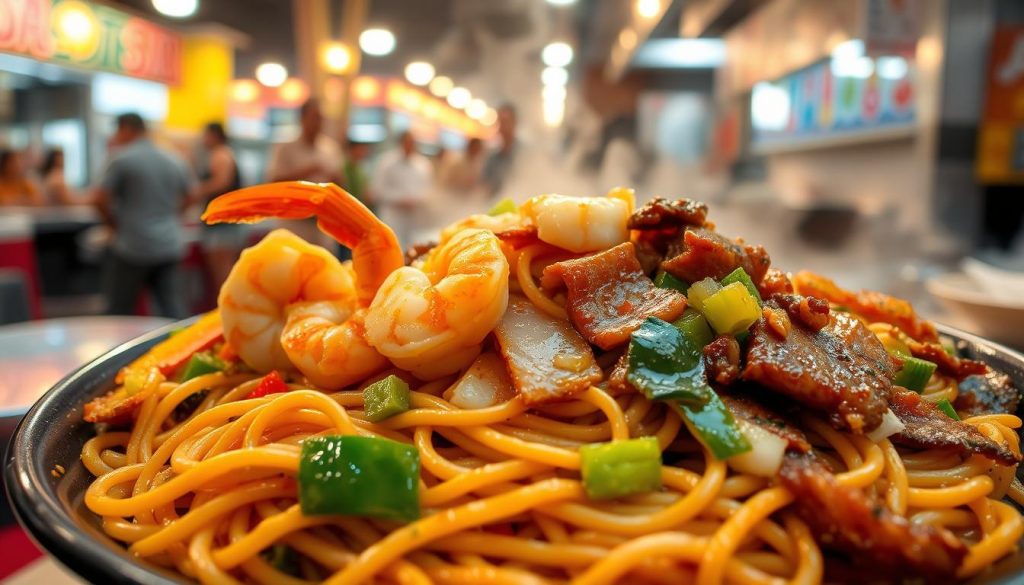
The rhythmic clang of metal spatulas against woks announces this dish’s arrival. Born in Fujian province, this noodle masterpiece evolved through generations of hawker refinement. Its magic lies in balancing contrasting textures – springy yellow egg noodles tangled with silky rice vermicelli.
Signature street Ingredients and Techniques
True artisans treat their woks like instruments. At Nam Sing stall, chefs toss handfuls of fresh squid and shrimp with precise wrist flicks. The “double-steam” method using wooden lids creates tender noodles with crispy edges. Key components include:
- Golden egg ribbons binding the dish
- Crunchy bean sprouts adding freshness
- Caramelized wok essence (wok hei)
Locals debate sauce styles – some prefer dry versions letting ingredients shine, others crave gravy-coated strands. The $4 portions at Old Airport Road Food Centre showcase both textures in one plate. Arrive before noon to secure your share from their limited batches.
Final touches make the experience: a dollop of sambal for heat and calamansi lime for brightness. “Squeeze, then mix thoroughly,” regulars advise. This citrusy zing cuts through rich umami flavors, revealing why this dish remains a lunchtime obsession.
The Beloved Chicken Rice Experience
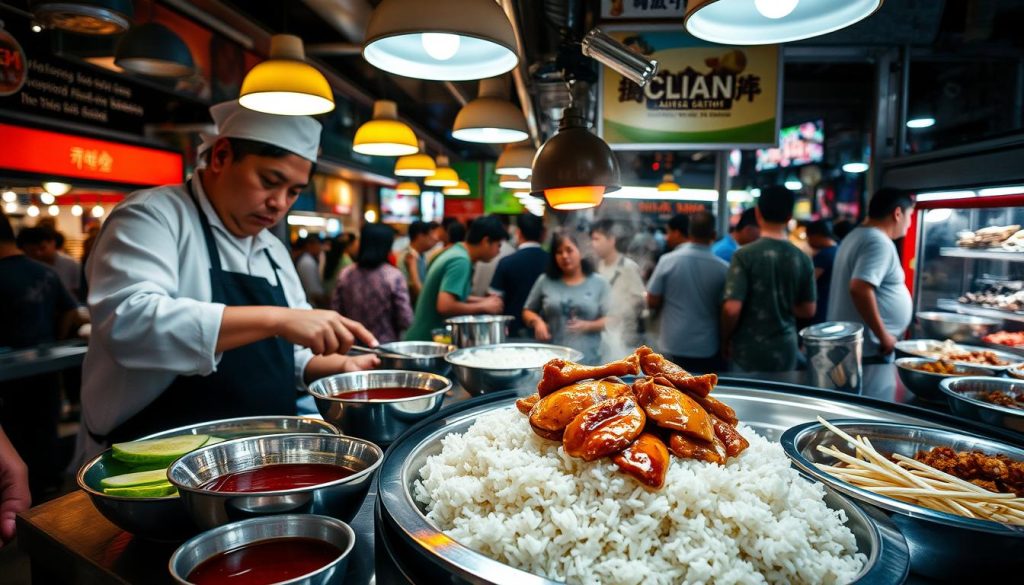
Three elements create magic here: tender poached chicken, aromatic rice, and a trio of dipping sauces. This deceptively simple dish showcases Hainanese culinary wisdom refined through generations. Locals debate favorite vendors like sports teams, each claiming their spot serves the ultimate version.
Tian Tian and Local Favorites
Maxwell Food Centre’s Tian Tian draws crowds with its “can’t-stop-eating” rice simmered in chicken broth and pandan leaves. Anthony Bourdain called it “so good you’ll cry”, while regulars praise the consistent texture – moist without being greasy. Arrive before noon (closed Mondays) for $12 half-chicken portions that vanish by 3 PM.
Flavor Profiles Across Vendors
Yet Con on Purvis Street offers a refined take with ginger-infused sauce and firmer poultry cuts. Compare their $18 plate against Tian Tian’s budget-friendly option:
| Vendor | Rice Style | Chicken Texture | Signature Sauce |
|---|---|---|---|
| Tian Tian | Fragrant, oily | Silky-soft | Chili-forward |
| Yet Con | Lighter, garlicky | Firm bite | Ginger purée |
True enthusiasts request extra dark soy for dipping. As one chef reveals: “The rice should shine alone – if you need sauce, we’ve failed.” Whether you prefer lunchtime queues or evening comfort meals, this dish delivers perfection in every grain.
Char Kway Teow: Mastering the Wok-Fried Noodles
The sizzle of hot metal tells you something extraordinary’s cooking. This beloved street dish transforms simple ingredients – flat rice noodles, plump shrimp, and caramelized soy sauce – into smoky perfection. At Bedok South Market, a legendary stall proves why technique matters more than fancy ingredients.
Hill Street’s masters work their carbon-steel woks like orchestra conductors. Their secret? Timing the sear between 60-90 seconds – enough to char without burning. Watch them juggle fiery flames and fresh cockles while maintaining that essential “wok hei” breath of the wok.
Wok-Frying Secrets
True artisans treat their stations like laboratories. Perfect texture comes from:
- High heat that sears noodles instantly
- Precise soy sauce ratios for balanced sweetness
- Quick tosses preventing clumping
This stall’s $4 plates showcase crispy edges against tender centers. Arrive early – they only fry 200 portions daily. Regulars suggest pairing with lime-spiked chili paste to cut through richness. As one chef grins: “Good char kway teow should leave smoke in your hair and joy in your belly.”
FAQ
What makes hawker centres so special in local culture?
These vibrant hubs blend history, affordability, and community. From humble street carts to regulated centers, they’ve evolved into social landmarks where generations bond over iconic dishes like chicken rice and laksa.
How does laksa reflect Singapore’s culinary fusion?
The dish merges Chinese and Malay influences—creamy coconut broth meets spicy sambal, paired with rice noodles. Sungei Road’s version keeps tradition alive, while modern twists add seafood or herb-infused broths.
Why is bak kut teh a comfort food favorite?
Simmered pork ribs in peppery broth offer warmth and depth. The tender meat falls off the bone, often enjoyed with fried dough sticks or garlic rice for a hearty, soul-soothing meal.
What sets Hokkien mee apart from other noodle dishes?
Its smoky wok hei (breath of the wok) elevates stir-fried egg noodles. Chefs toss prawns, squid, and pork belly in a rich prawn stock, creating a caramelized crust that’s crispy yet saucy.
Are there vegetarian options at street hawker stalls?
Yes! Look for roti prata without egg, carrot cake (made with radish), or vegetarian nasi lemak. Some stalls substitute mock meat in classics like Hokkien mee or curry.
How do vendors keep chicken rice so flavorful?
Tian Tian and others poach poultry in master stock, then chill it for tender texture. Fragrant rice cooks in chicken fat and pandan, while chili-ginger dips add tangy heat.
What’s the secret to perfect char kway teow?
High heat unlocks the wok’s magic—thick noodles caramelize with sweet soy, lup cheong (sausage), and cockles. A splash of belachan (shrimp paste) ties the umami together.
Where can I find halal-certified street eats?
Head to Adam Road Food Centre or Haig Road Market. Halal-friendly picks include nasi lemak, mee soto, and satay—just check for certification stickers!
What’s a must-try dish for first-time visitors?
Start with chili crab—succulent crustaceans drenched in sweet-spicy tomato gravy. Pair it with mantou (fried buns) to soak up every drop!
Do hawker centers accommodate dietary restrictions?
Many do! Gluten-free options include grilled seafood or rojak (salad with peanut sauce). For less spice, request “no chili” or “mild” when ordering.







I don’t think the title of your article matches the content lol. Just kidding, mainly because I had some doubts after reading the article. https://accounts.binance.com/pt-PT/register-person?ref=KDN7HDOR